WELCOME TO REACON

- All
- Product Name
- Product Keyword
- Product Model
- Product Summary
- Product Description
- Multi Field Search
 |
REACON
| Quantity: | |
|---|---|
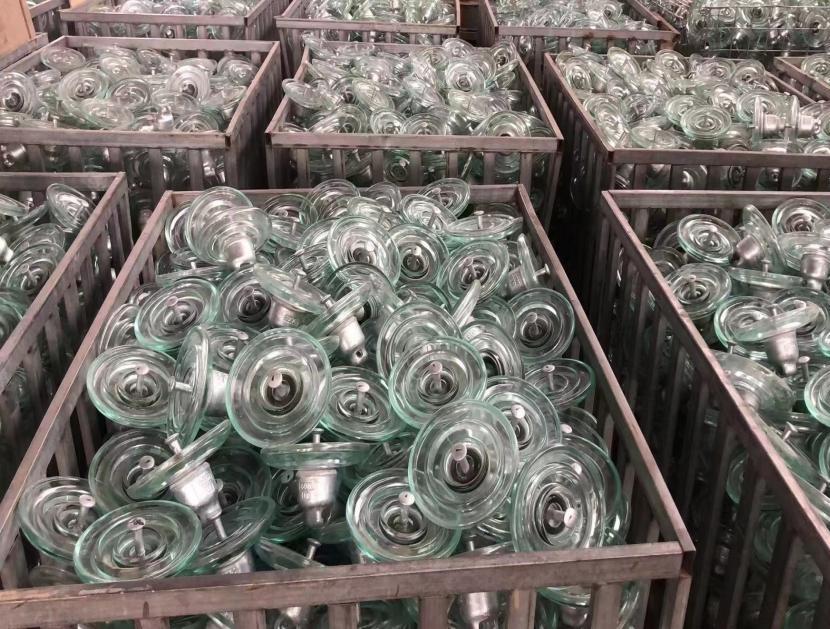
REACON LXY Series Toughened Glass Suspension Insulators are designed for overhead power transmission and distribution networks where electrical insulation and mechanical conductor support must work together. The product range includes U70B, U80BL, U100BL, U120BL, and U160BL configurations, covering different mechanical load requirements for utility line construction and maintenance projects.
Each insulator consists of a toughened glass insulating disc, metal cap, and connecting pin. The glass element provides the electrical insulation path, while the metal fittings transfer tensile forces through the insulator string. Multiple units can be connected in series to form an insulator assembly suitable for the required system voltage and mechanical loading conditions.
The transparent glass body offers an additional advantage during line inspection. Visible cracks or damage can be identified more easily than on opaque insulating materials, helping maintenance personnel assess the condition of installed insulator strings.
REACON supplies different LXY series configurations for transmission towers, distribution structures, substation connections, and other outdoor electrical installations. The selection can be based on mechanical failing load, creepage distance, coupling dimensions, and applicable electrical requirements.
A toughened glass suspension insulator is a composite assembly of insulating and metallic components.
The main insulating component is manufactured from specially processed glass. During production, the glass undergoes controlled heating and rapid cooling to create a toughened structure with improved mechanical characteristics.
The metal cap and pin are attached to the glass element to provide mechanical connections with adjacent insulator units. When assembled into a string, the connected units form a mechanical suspension path between the transmission tower and the conductor.
At the same time, the glass discs maintain the necessary electrical separation between energized conductors and grounded structures.
This cap-and-pin arrangement allows individual units to be connected, replaced, and combined into strings according to transmission line design requirements.
REACON provides several mechanical load options within the LXY glass suspension insulator range.
The U70B model is designed for overhead line applications requiring a nominal mechanical failing load of 70kN. Its compact disc structure and ball-and-socket connection arrangement make it suitable for conventional suspension string assemblies.
The U80BL configuration provides an 80kN mechanical load rating. It is intended for projects requiring a load specification between the 70kN and 100kN classes.
The U100BL model has a specified mechanical failing load of 100kN. It is suitable for overhead transmission installations where the mechanical requirements call for a higher load capacity than standard 70kN units.
With a 120kN mechanical failing load rating, the U120BL model is designed for transmission line sections requiring additional tensile capacity. It can be incorporated into suspension or tension string arrangements according to the line design.
The U160BL is the highest-load option among the five models covered on this page. Its 160kN mechanical rating and larger connection configuration make it suitable for applications involving higher conductor tension and demanding mechanical conditions.
Parameter | U70B | U80BL | U100BL | U120BL | U160BL |
Product Series | LXY | LXY | LXY | LXY | LXY |
IEC Designation | U70B | U80BL | U100BL | U120BL | U160BL |
Insulator Material | Toughened Glass | Toughened Glass | Toughened Glass | Toughened Glass | Toughened Glass |
Minimum Mechanical Failing Load | 70kN | 80kN | 100kN | 120kN | 160kN |
Insulating Part Diameter | 255mm | 255mm | 255mm | 255mm | 280mm |
Structural Height | 140mm | 146mm | 146mm | 146mm | 146mm |
Creepage Distance | 320mm | 320mm | 320mm | 320mm | 380mm |
Ball and Socket Coupling | 16mm | 16mm | 16mm | 16mm | 20mm |
Lightning Impulse Withstand Voltage | 100kV | 100kV | 100kV | 100kV | 105kV |
Wet Power Frequency Withstand Voltage | 40kV | 40kV | 40kV | 40kV | 42kV |
Approximate Weight | 3.77kg | 3.85kg | 4.1kg | 4.2kg | 6.1kg |
The insulating disc is produced from specially processed glass designed to withstand the mechanical and electrical stresses encountered in overhead power line service.
Its transparent appearance allows the condition of the insulating body to be visually examined during maintenance inspections. This makes it easier to identify certain types of damage without relying entirely on specialized detection equipment.
The metal cap and pin form the mechanical connection between adjacent insulator units. The ball-and-socket arrangement allows multiple discs to be linked into a flexible suspension string.
This configuration is widely used in overhead transmission systems because the number of connected units can be adjusted according to the required insulation level and mechanical loading.
The smooth glass surface limits the retention of loose dust and certain contaminants under suitable environmental conditions. Natural rainfall can help remove accumulated surface deposits.
For heavily polluted or coastal locations, the required creepage distance and insulator profile should be selected according to the site’s contamination severity.
One distinctive characteristic of toughened glass insulators is their transparent insulating body. When the glass element is damaged, its condition can often be identified through visual inspection.
This provides maintenance teams with a practical method of identifying potentially defective units along long transmission routes.
The LXY product range covers several mechanical failing load ratings, allowing utilities and engineering contractors to select a suitable model based on conductor tension, span arrangement, tower loading, and project specifications.
The manufacturing of toughened glass suspension insulators involves several controlled production stages.
Selected glass materials are prepared and processed to achieve the required composition and consistency for electrical insulation applications.
The prepared material is heated and formed into the required disc geometry. The shape and dimensions are controlled to ensure consistency between individual units.
The formed glass undergoes a controlled thermal treatment involving heating and rapid cooling. This process creates a toughened glass structure with improved resistance to mechanical stress.
The glass insulating element is assembled with the corresponding metal cap and pin. The connection structure is designed to transfer mechanical loads between adjacent insulator units.
Finished units undergo dimensional, visual, mechanical, and electrical inspections according to the applicable product standards and technical specifications.
Glass suspension insulators are installed in strings on transmission towers to support conductors and maintain electrical separation from grounded tower structures.
Different mechanical load classes can be selected according to the line’s conductor arrangement and mechanical design.
For distribution infrastructure, glass insulator strings can be used where the electrical design requires suspension-type insulation and mechanical conductor support.
River crossings, valley crossings, and other long-span installations may involve increased conductor tension. Higher mechanical load models can be considered as part of the overall line design.
Substation Incoming and Outgoing Lines
Glass suspension insulators can be incorporated into overhead line connections at substations, supporting conductors while maintaining the required electrical clearance.
The LXY series can be considered for new transmission line construction, existing network reinforcement, and replacement of damaged or outdated suspension insulator units.
The selection and installation of glass suspension insulators should follow the electrical and mechanical design of the transmission or distribution line.
First, determine the system voltage, required insulation level, conductor arrangement, and mechanical loading conditions. Select an appropriate LXY model based on its mechanical failing load, creepage distance, and connection dimensions.
Next, connect the individual insulator units using compatible ball-and-socket fittings and locking devices. The number of discs in the string is determined by the required insulation level and environmental conditions.
The completed insulator string is then connected to the tower hardware and conductor suspension assembly using suitable line fittings.
During installation, check that the metal fittings are correctly engaged and that the locking devices are properly secured. The glass bodies should also be visually inspected for cracks, chips, or other signs of damage.
After installation, routine inspection should focus on the condition of the glass elements, metal fittings, and connecting hardware.
REACON glass suspension insulators are subject to manufacturing inspection and performance testing based on the applicable product specifications.
The inspection process can include:
• Visual inspection of the glass insulating body
• Dimensional measurement of the disc and metal fittings
• Mechanical tensile or failing load testing
• Power frequency withstand voltage testing
• Lightning impulse withstand voltage testing
• Puncture voltage testing
• Thermal and environmental performance testing where specified
• Verification of metal fitting assembly and connection dimensions
Relevant international standards for glass suspension insulators include IEC 60305 and IEC 60383. Product testing and acceptance requirements are determined by the applicable standard and project specifications.
Q1: What is the difference between U70B, U80BL, U100BL, U120BL, and U160BL glass insulators?
The main difference is their specified mechanical failing load. The five models provide 70kN, 80kN, 100kN, 120kN, and 160kN load ratings respectively. Their dimensions and coupling configurations may also differ.
Q2: What material is used in LXY series suspension insulators?
The insulating disc is manufactured from toughened glass. Metal caps and pins are assembled with the glass body to provide the mechanical connection required for suspension string applications.
Q3: Why are glass insulators used on overhead transmission lines?
Toughened glass insulators combine electrical insulation with mechanical conductor support. Their transparent bodies also make certain types of physical damage easier to identify during line inspections.
Q4: Can multiple glass insulator units be connected together?
Yes. Individual cap-and-pin units can be connected in series to form an insulator string. The number of units depends on system voltage, insulation coordination, environmental conditions, and mechanical requirements.
Q5: What is the function of the creepage distance?
Creepage distance is the shortest distance measured along the insulating surface between conductive parts. It is an important factor in determining insulation performance under polluted or wet operating conditions.
Q6: Are these glass insulators suitable for coastal and polluted environments?
They can be used in outdoor power networks, including locations exposed to environmental contamination. For coastal, industrial, and heavily polluted areas, the appropriate creepage distance and insulation profile should be selected according to the site’s pollution level.
Q7: Can the insulator be used in both suspension and tension applications?
Yes. Glass units can be assembled into suspension or tension strings, provided that the mechanical rating, fitting arrangement, and electrical requirements are suitable for the installation.
Q8: What standards apply to glass suspension insulators?
IEC 60305 specifies dimensional and mechanical characteristics for string insulator units with ball-and-socket couplings. IEC 60383 covers relevant test requirements for ceramic or glass insulators used in overhead lines.
Q9: Does REACON provide different mechanical load ratings?
Yes. The LXY series includes different mechanical load configurations, including U70B, U80BL, U100BL, U120BL, and U160BL, for different transmission and distribution project requirements.
REACON supplies toughened glass suspension insulators and other power line insulation products for electrical utilities, transmission contractors, and distribution network projects.
The LXY series is available in different mechanical load configurations to support a range of overhead line designs.
For product selection and quotation, REACON can provide technical specifications, dimensional information, and product configurations according to project requirements.