WELCOME TO REACON

- All
- Product Name
- Product Keyword
- Product Model
- Product Summary
- Product Description
- Multi Field Search
 |
REACON
| Quantity: | |
|---|---|
In overhead power distribution construction, not every crossarm can be positioned directly across the centerline of a utility pole. In streets, narrow passages and locations near buildings, the crossarm may need to be installed on one side of the pole to maintain the required conductor clearance.
The REACON ASTM A153 Hot Dip Galvanized Alley Arm Brace is designed for these offset crossarm arrangements. It functions as a diagonal structural support between the utility pole and the side-mounted crossarm, helping maintain the position and stability of the overhead line assembly.
Manufactured from structural steel, the brace features an angled profile with prepared attachment points for connection to the pole and crossarm. Its geometry allows it to form a rigid supporting arrangement when installed at an appropriate angle.
The hot dip galvanized surface provides a protective zinc coating against moisture and atmospheric corrosion, making the product suitable for outdoor utility infrastructure.
REACON supplies alley arm braces for power distribution construction, pole line maintenance and electrical infrastructure projects.
An alley arm brace is designed around the geometry of an offset crossarm installation. Its construction is different from a conventional flat crossarm brace because it must provide diagonal support between two separate mounting positions.
1. Angled Steel Body
The main structure is manufactured from steel angle sections. The angled profile provides structural rigidity and helps the brace resist mechanical forces acting on the crossarm assembly.
2. Pole-Side Attachment End
One end of the brace is shaped to connect with the utility pole. Its mounting arrangement accommodates compatible machine bolts or lag screws, depending on the pole structure and specified hardware.
3. Crossarm-Side Attachment End
The opposite end connects to the side-mounted crossarm. The prepared mounting position allows the brace to be secured to the supporting arm with suitable fastening hardware.
4. Diagonal Support Arrangement
When installed, the brace forms an angled connection between the pole and crossarm. This arrangement helps control crossarm movement and maintain the intended structural alignment.
5. Lineman Step
Certain alley arm brace configurations incorporate a welded or riveted lineman step. This feature provides a foothold for authorized line workers during pole installation and maintenance activities.
The brace is intended for installations where the crossarm is mounted to one side of the utility pole. It provides a practical reinforcement solution when a conventional centered crossarm arrangement is not suitable.
Its angled steel construction creates an additional supporting connection between the pole and crossarm. This helps maintain the structural position of the side-mounted assembly under service conditions.
The steel surface is protected by hot dip galvanizing according to the specified ASTM A153 coating requirement. The zinc layer helps limit corrosion caused by rain, humidity and outdoor exposure.
The attachment ends are designed for bolted installation. Suitable hole positions and fastening hardware allow the brace to be incorporated into different utility pole structures.
The product is suitable for new overhead line installations, pole structure modification and maintenance projects where side-mounted crossarms require additional support.
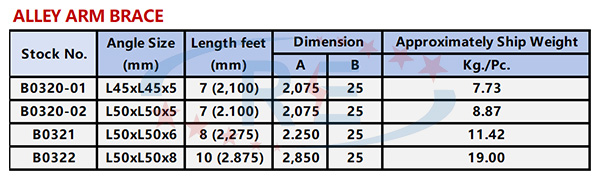
Alley arm braces can be manufactured in different lengths, steel section sizes and mounting arrangements to accommodate project-specific pole structures.
Item | Description |
Product Name | Alley Arm Brace |
Material | Structural Steel |
Surface Treatment | Hot Dip Galvanized |
Galvanizing Standard | ASTM A153 |
Structural Type | Angled Steel Brace |
Installation Position | Between Utility Pole and Side-Mounted Crossarm |
Mounting Method | Bolted Connection |
Installation Angle | Approximately 45° |
Optional Feature | Lineman Step |
Application | Overhead Power Distribution Structures |
Customization | Available |
The primary application is supporting crossarms installed on one side of a utility pole. The diagonal brace helps reinforce the offset arrangement and maintain the intended position of the arm.
In urban streets and narrow access routes, overhead conductors may require an offset arrangement to avoid nearby structures. Alley arm braces provide additional support for these side-mounted crossarms.
Where buildings, walls or other physical obstructions restrict the available mounting space, an alley arm configuration can help position the crossarm away from the centerline of the pole.
The brace can be incorporated into rural overhead distribution networks where utility poles use side-mounted crossarm structures.
During distribution network upgrades or pole structure renovation, suitable alley arm braces can be used to reinforce existing offset crossarm assemblies.
Proper installation ensures that the brace works together with the pole and crossarm as an integrated supporting structure.
Step 1: Check the Pole Structure
Confirm the crossarm position, pole dimensions and available mounting locations. Select a brace configuration compatible with the intended structure.
Step 2: Position the Crossarm
Install the crossarm in the designated side-mounted position. Check its orientation and alignment before fitting the diagonal support.
Step 3: Place the Alley Arm Brace
Position the brace between the pole and crossarm, following the specified mounting arrangement. The brace is generally installed at an angle of approximately 45 degrees.
Step 4: Secure the Connections
Use compatible machine bolts or lag screws to fasten the pole-side and crossarm-side attachment points. Tighten the connections according to the project installation requirements.
Step 5: Inspect the Assembly
Check the alignment of the crossarm, the position of the brace and the tightness of all fasteners. Confirm that the completed structure follows the approved construction drawing.
Installation should be carried out by qualified line construction personnel using the appropriate safety procedures.
The reliability of an alley arm brace depends on the consistency of its steel structure, attachment dimensions and protective coating.
REACON focuses on the production and supply of galvanized pole line hardware for overhead electrical infrastructure.
Quality inspection may include:
• Verification of steel material and section dimensions.
• Inspection of brace length and overall geometry.
• Checking of mounting hole positions and diameters.
• Examination of formed ends and welded components.
• Inspection of galvanizing coverage and surface condition.
• Verification of assembly quality and packaging condition.
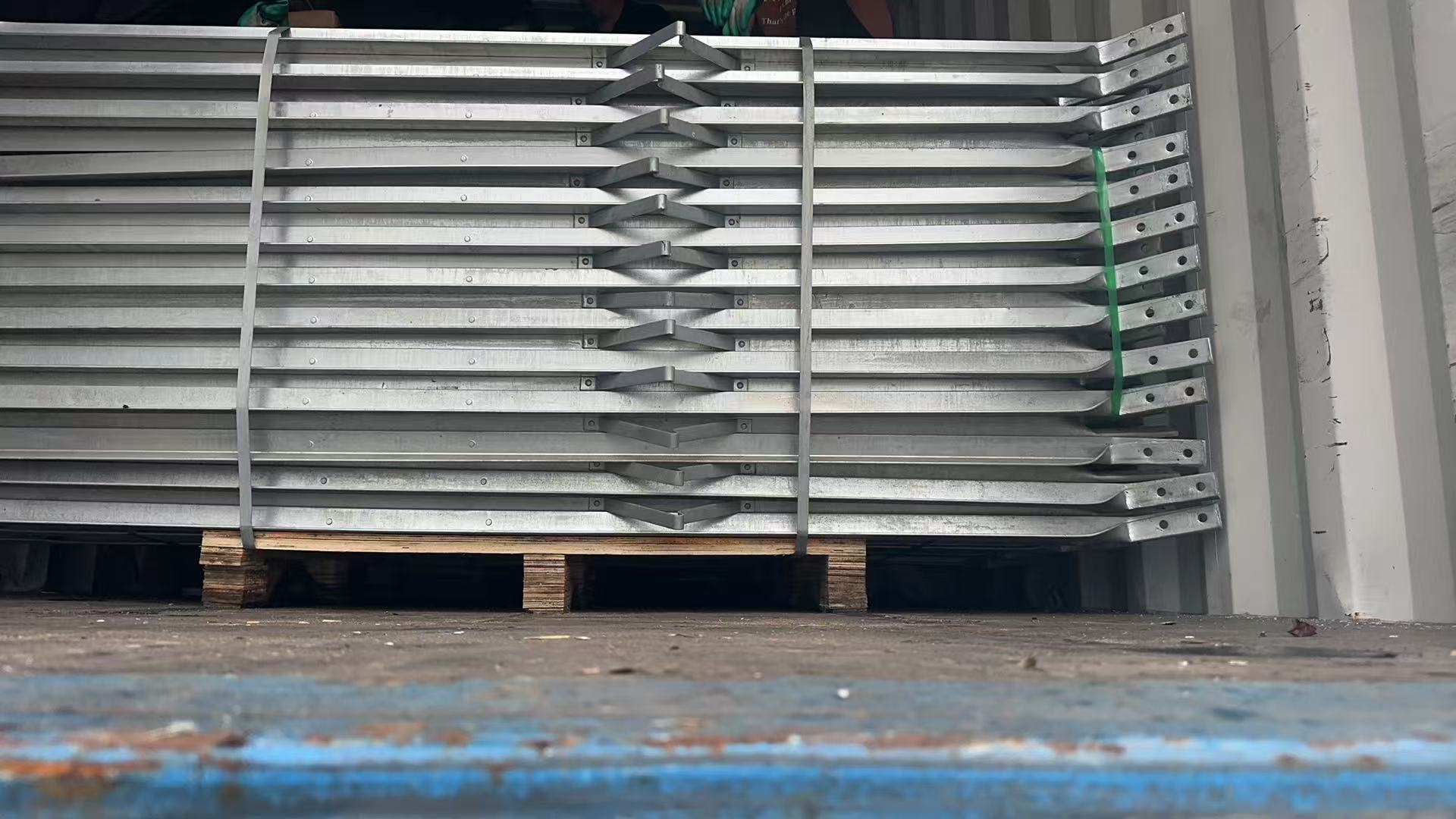
The finished products are prepared for shipment according to the required project specifications and packaging arrangements.
REACON ELECTRIC GROUP CO., LTD. supplies pole line hardware and electrical connection components for power transmission and distribution systems.
Our product range includes steel crossarms, alley arm braces, pole bands, mounting brackets, bolts, pins and other galvanized utility fittings.
For alley arm brace requirements, we can evaluate different steel profiles, lengths, mounting hole arrangements and structural configurations according to customer drawings or project specifications.
Our products are supplied for utility construction, electrical contractors, distribution equipment manufacturers and power infrastructure projects.
Q1: What is an alley arm brace used for?
An alley arm brace provides diagonal reinforcement for crossarms installed on one side of a utility pole. It helps maintain the stability and alignment of offset crossarm structures.
Q2: Why is an alley arm brace installed at approximately 45 degrees?
The diagonal arrangement creates a supporting connection between the pole and crossarm. This configuration helps reinforce the side-mounted structure and resist unwanted movement.
Q3: What material is commonly used for alley arm braces?
Structural steel is commonly used because it provides the mechanical strength required for utility pole support applications.
Q4: What is the purpose of hot dip galvanizing?
Hot dip galvanizing applies a zinc coating to the steel surface. This protective layer helps reduce corrosion during long-term outdoor exposure.
Q5: Does the product include a lineman step?
Some configurations include a welded or riveted lineman step. The availability depends on the selected product design.
Q6: Can the brace be installed on either side of a utility pole?
Suitable designs can be arranged for left-side or right-side support. The required orientation should be determined by the pole construction drawing.
Q7: Can REACON manufacture different lengths and dimensions?
Yes. Different lengths, steel section sizes and mounting configurations can be evaluated according to project drawings and technical requirements.