WELCOME TO REACON

- All
- Product Name
- Product Keyword
- Product Model
- Product Summary
- Product Description
- Multi Field Search
Views: 0 Author: Site Editor Publish Time: 2026-05-06 Origin: Site
Upgrading electrical services, integrating solar panels, or replacing aging infrastructure requires careful planning and precision. You must install a compliant, appropriately sized utility meter socket to safely connect your facility to the local power grid. Selecting the wrong unit results in immediate rejection by local utility companies. This simple mistake triggers municipal code violations, costly rework, and severe physical safety hazards like arc faults. Inspectors will immediately halt your project if the chosen equipment fails to meet strict regional standards.
This guide provides a compliance-first, engineering-based framework for evaluating and selecting the correct hardware. We will show you how to choose the right power metering socket for your specific application. You will learn how to navigate complex load calculation rules, bypass requirements, and environmental ratings. By strictly following this framework, you can minimize installation friction and ensure long-term operational safety for the entire building.
Utility dictates the rules: Local utility approval is the absolute final deciding factor for any meter base selection.
Specs must match service: Amperage, feed direction (overhead/underground), and phase requirements must strictly align with the facility’s load calculations and NEC standards.
Downtime tolerance dictates bypass: Commercial setups typically require lever bypass mechanisms to avoid power interruption during meter maintenance, while residential units often use simpler horn bypasses.
Environment dictates material: NEMA 3R weatherproof ratings and specific anti-corrosion materials (like aluminum or galvanized steel) are mandatory based on geographic climate realities.
Hardware selection requires a highly methodical engineering approach. You must evaluate five core technical parameters before purchasing any equipment to avoid inspection failures.
You must rigorously evaluate baseline amperage requirements first. Minimum NEC standards dictate a 100A service for very small residential structures. However, standard residential homes and light commercial spaces almost universally demand 200A units today. For large custom homes or heavy commercial buildings, you must scale up to Class 320 or robust 400A+ enclosures. Beyond sheer amperage, you must verify the Short Circuit Current Rating (SCCR). Ensure the SCCR labeling strictly matches or exceeds the available fault current at your specific installation location. Failing to match the SCCR creates massive fire risks during rare but devastating electrical surges.
Utility companies mandate specific mechanical security designs to prevent energy theft and meter tampering.
Ring-Type: This traditional older design uses an external sealing ring and a physical padlock to secure the meter.
Ringless-Type: This modern design features a heavy hinged cover. The cover physically secures the meter in place when closed. Utilities increasingly mandate ringless units because they offer enhanced tamper resistance and streamline the sealing process.
How the local utility routes power to your building directly dictates the enclosure design.
Overhead (OH): Service drops descending from a utility pole require specific top-hub knockouts. These openings allow seamless watertight conduit connections from above.
Underground (UG): Buried utility trench lines enter through bottom or rear knockouts. Underground setups often require noticeably wider enclosures. The extra physical space safely accommodates the larger bending radii required for stiff heavy-gauge wires.
Utility meters require periodic maintenance, calibration, or replacement. The internal bypass mechanism determines if your facility loses power during this routine process.
Lever Bypass: This robust clamping jaw mechanism physically redirects electrical current around the meter socket. It remains essential for continuous-power operations in commercial and industrial settings.
Horn Bypass: This simpler system uses extension horns and external jumpers. It serves as a highly cost-effective solution for single-family residential homes. Residential users typically accept temporary power drops during rare maintenance events.
You must assess the internal terminal needs based on your facility's exact phase requirements.
4-jaw: Standard configuration used for typical single-phase residential services.
5-jaw: Strictly required for network setups or 3-phase 3-wire systems. You often achieve this configuration by installing a dedicated 5th jaw kit at the 9 o'clock position.
7-jaw: Necessary for complex 3-phase 4-wire commercial services.
Different built environments demand entirely different enclosure profiles. You must narrow down your solution categories based on the specific end-user facility to find the optimal match.
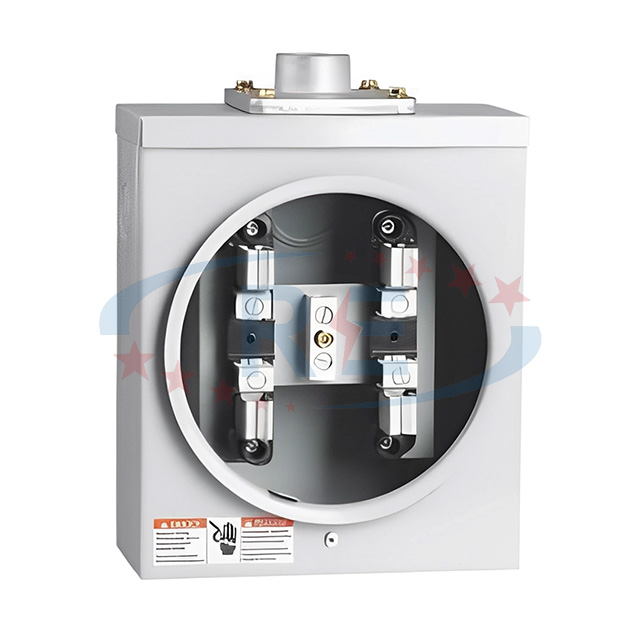
Homeowners generally prioritize baseline code compliance, physical safety, and overall cost-efficiency. Surge protection integration is rapidly becoming a critical safety feature for modern home electronics. Standard housing setups usually utilize simple single-position, 200A, ringless enclosures. For example, installing a properly rated residential meter socket handles typical daily household loads perfectly. We see progressive municipalities actively moving away from older 100A limits as homes steadily electrify.
Industrial facilities face massive, fluctuating electrical demands. You must focus entirely on heavy-duty construction and extremely high SCCR tolerance. Lever bypass functionality is strictly mandatory here. Businesses simply cannot afford to shut down production lines for a routine utility meter swap. Modern industrial units also frequently integrate directly with sophisticated Building Management Systems (BMS). This connectivity allows facility managers to track peak demand spikes in real time.
Apartment complexes, condos, and strip malls require highly scalable solutions. You should focus on modularity and labor-saving installations to keep project timelines intact. Evaluate multi-position ganged layouts carefully. Ganged configurations allow independent, individual tenant metering fed from a single primary service drop. This heavily reduces long conduit runs, saves copper wiring costs, and minimizes the physical wall footprint.
Application Type | Standard Amperage | Typical Bypass | Key Feature Focus |
|---|---|---|---|
Single-Family Residential | 100A - 200A | Horn Bypass | Cost-efficiency, Compact size |
Commercial / Industrial | 320A - 400A+ | Lever Bypass | High SCCR, Heavy-duty jaws |
Multi-Unit Ganged | 100A - 200A (per unit) | Varies by Utility | Modularity, Shared primary feed |
Physical hardware must survive brutal local environmental stresses over decades of use. Enclosure degradation leads to unseen water ingress, creating severe arc fault and electrocution risks.
You absolutely cannot install indoor-rated electrical boxes on exterior building walls. National electrical standards strictly require a certified weatherproof meter base for all outdoor exposed applications. A NEMA 3R rating acts as the absolute minimum baseline requirement. This specific enclosure rating ensures the shell protects internal live electrical components against falling rain, sleet, and external ice formation. NEMA 3R utilizes gravity-fed weep holes at the bottom to drain internal condensation effectively. If water pools inside the base due to improper sealing, it will instantly short-circuit the main service line.
Local geography heavily influences proper material selection.
Coastal Areas: High salt-fog environments destroy standard untreated steel rapidly. You must use marine-grade aluminum or specialized powder-coated galvanized steel. These specific materials effectively prevent rapid corrosion caused by salty ocean air.
Extreme Temperatures: You must carefully evaluate material expansion and contraction cycles. Sub-zero winters or high-desert summers easily degrade cheap rubber gaskets. If a gasket fails and cracks, water freely enters the housing. You must verify the enclosure retains its seal integrity across wild ambient temperature swings.
Modern electrical demands are increasing at an unprecedented rate. You must highlight structural value-add considerations that prevent premature equipment obsolescence.
Grid-tied solar arrays fundamentally change how facilities interact with local utility companies. You must ensure your selected hardware safely accommodates bi-directional power flow. Local utilities mandate highly specific configurations for solar net metering approvals. If you plan to install rooftop panels eventually, you might need an upgraded base right now. Some specific utilities require dual-meter setups or special integrated breaker configurations to measure power sent back to the grid accurately.
Installing a 100A unit today is an incredibly short-sighted decision. Even a standard 200A service struggles if you add multiple heavy continuous loads simultaneously. A standard Level 2 EV charger pulls up to 60 continuous amps for several hours. If you add an electric heat pump, an induction stove, and an EV charger, your peak draw escalates rapidly. Pre-emptively installing a 320A base or a heavy-duty RE-100S meter socket rated for higher sustained loads saves thousands of dollars later. Replacing an undersized unit in the future requires completely tearing down and rebuilding the entire service entrance.
Many promising upgrade projects fail abruptly during the final inspection phase. We consistently see contractors and homeowners make the exact same avoidable errors. Here are the top installation mistakes you must actively avoid.
Failing to Secure the Utility Approved Equipment List Buying an NEC-compliant, strictly UL-listed unit means absolutely nothing if the utility rejects it. Risk: The local utility still refuses to energize the electrical system because the hardware does not appear on their highly specific, proprietary approved list. Always demand this exact list before purchasing anything.
Ignoring Specific Model/Component Pairings Never mix and match unapproved parts from different manufacturers. Risk: Using unmatched hubs, generic 5th jaw kits, or mismatching specialized parts causes immediate inspection failures. Stick exclusively to the manufacturer-approved accessory catalogs to guarantee safe operation.
Neglecting Spatial and Grounding Clearances Physical placement matters just as much as the internal hardware specs. Risk: Violating NEC Article 110.26 (working space) or Article 250 (grounding and bonding) results in mandatory, expensive re-installation. Inspectors demand clear physical access and flawless, uninterrupted grounding paths. Do not install the base behind physical obstructions, and never skip the primary grounding rod connections.
Improper Torque on Terminal Lugs You cannot guess how tight a connection should be. Risk: Failing to torque terminal lugs correctly causes invisible hot spots. You must use a calibrated torque wrench. Loose connections arc heavily and easily catch fire under heavy loads. Conversely, overtightened connections strip the soft aluminum threads completely.
Selecting a utility power base is an exercise in strict compliance, not casual personal preference. Your entire decision hierarchy must remain rigid: Local Utility Rules dictate the Electrical Load Requirements. Those load requirements then face rigid Environmental Constraints. Finally, those constraints must account for your facility's Future Capacity Needs.
Before you purchase any electrical hardware, take clear, methodical action. First, request the latest "Approved Meter Equipment" document from your specific local utility provider. Next, calculate your exact load requirements accurately to account for future EV or solar additions. Finally, consult directly with a licensed electrical supplier to finalize your exact bill of materials. Getting it right the first time guarantees a safe, legal, and rapid grid connection.
A: Yes, utilities maintain strict approved equipment lists based on their unique grid infrastructure. Installing an unapproved brand or model guarantees they will firmly refuse to connect your service, even if the unit is perfectly safe and UL-listed.
A: This simply refers to the mechanical locking differences. A ringless design uses a hinged, tamper-resistant cover. Modern utilities heavily prefer this style. A ring-type design uses a separate external sealing ring to lock the unit in place.
A: You typically require a 5th jaw kit when utilizing a 120/208V network service. Certain 3-wire systems also mandate it to provide a necessary neutral reference point for accurate power measurement.
A: The utility's power delivery method determines this completely. If power arrives via utility poles, you need an overhead setup requiring top hubs. If power arrives via buried trench lines, you need an underground setup requiring bottom or back entry knockouts.