WELCOME TO REACON

- All
- Product Name
- Product Keyword
- Product Model
- Product Summary
- Product Description
- Multi Field Search
 |
| Quantity: | |
|---|---|
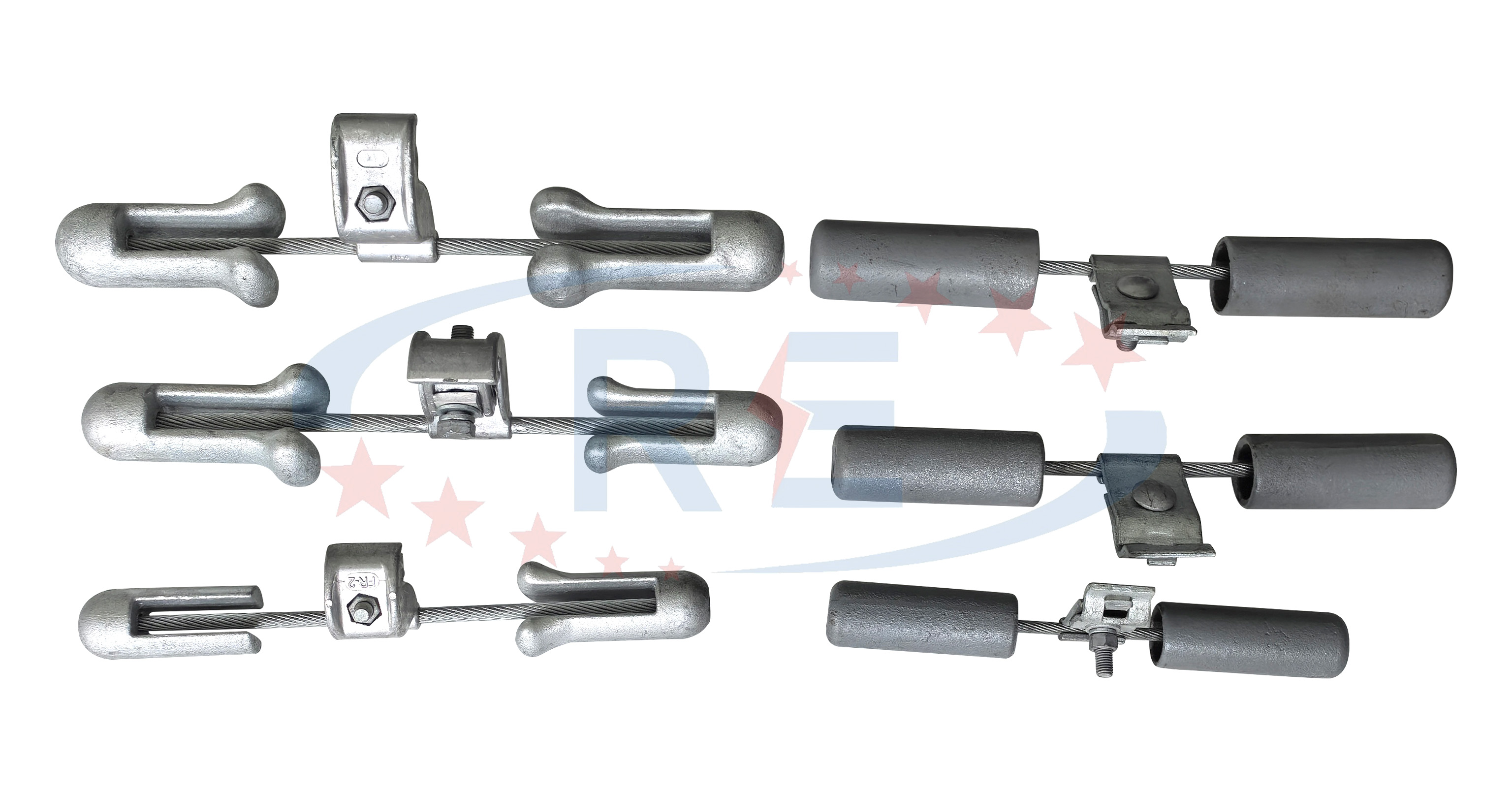
The Anti-Vibration Damper for Transmission Line Protection is designed to reduce wind-induced vibration and aeolian vibration on overhead conductors. This transmission line anti vibration damper effectively absorbs and dissipates vibration energy generated by wind, protecting conductors, fittings, and towers from fatigue damage. With stable performance and durable materials, the anti-vibration damper for transmission line protection is an essential component for long-term reliability of power transmission systems.
Effectively reduces aeolian and wind-induced vibration
Protects conductors and fittings from fatigue damage
Stable damping performance over a wide frequency range
High-strength clamp ensures secure installation
Durable materials suitable for long-term outdoor use
Improves service life of transmission lines
Compatible with various conductor sizes
Low maintenance after installation
Utility-grade reliability for transmission projects


High voltage transmission lines
Overhead conductors exposed to steady wind
Mountainous, coastal, and open terrain areas
New transmission line construction projects
Vibration mitigation for existing power lines
• Select the appropriate anti-vibration damper for transmission line protection based on conductor size and span length.
• Install the damper on the conductor at the specified distance from the suspension or strain clamp.
• Secure the clamp firmly to ensure reliable mechanical contact.
• Install dampers symmetrically when required by design specifications.
• Inspect installation alignment and fixation before commissioning.
Manufactured with high-quality steel and damping materials
Strict testing for mechanical strength and vibration performance
Stable damping characteristics under long-term operation
Consistent production quality for transmission applications
Each damper inspected before delivery
Q1: What vibration does this damper mainly reduce?
A1: It mainly reduces aeolian and wind-induced vibration on overhead conductors.
Q2: Is it suitable for high voltage transmission lines?
A2: Yes, it is widely used in high voltage transmission line projects.
Q3: Does installation require special tools?
A3: Standard line installation tools are sufficient.
Q4: How many dampers are needed per span?
A4: The quantity depends on conductor type and span length.
Q5: Is maintenance required after installation?
A5: Only routine inspection is required under normal conditions.