WELCOME TO REACON

- All
- Product Name
- Product Keyword
- Product Model
- Product Summary
- Product Description
- Multi Field Search
 |
| Quantity: | |
|---|---|
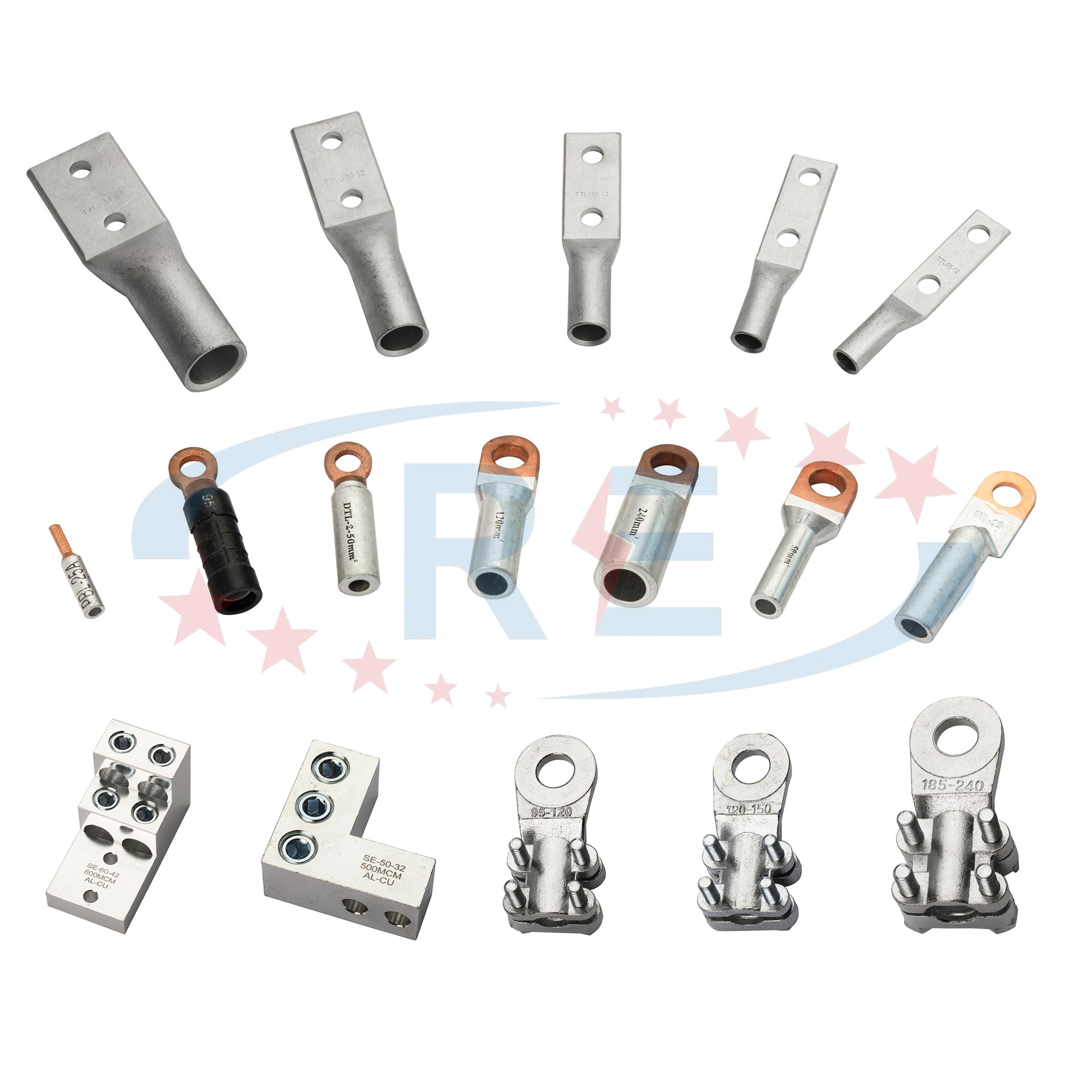
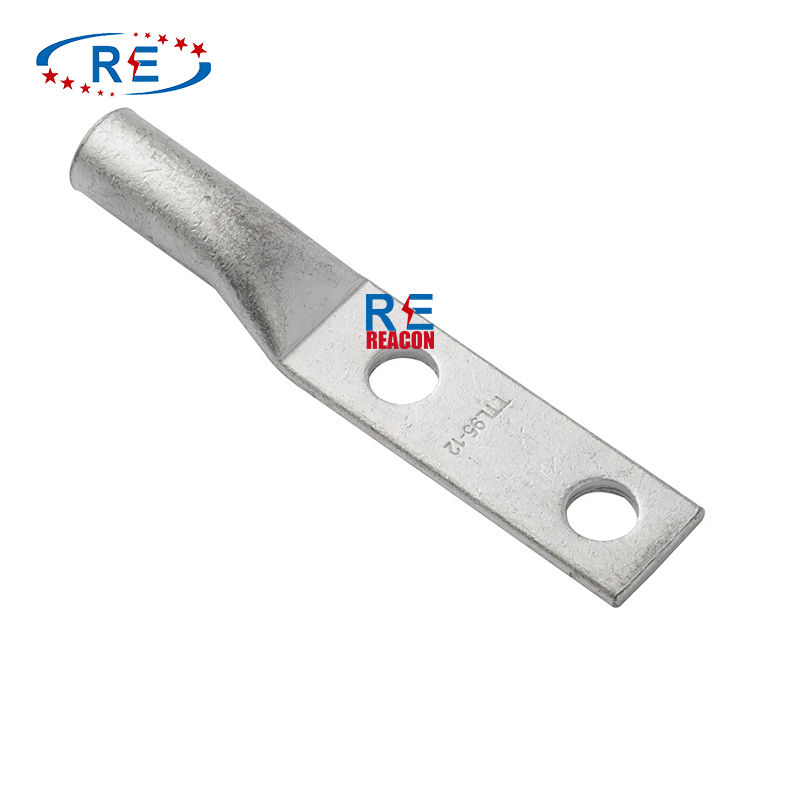
The DL Aluminum Cable Lug is a high-performance electrical termination accessory designed for secure and efficient cable connection in low-voltage and medium-voltage power distribution systems. Made from high-conductivity aluminum, the DL Aluminum Cable Lug ensures low electrical resistance, stable current transfer, and reliable mechanical strength. It is widely used in substations, panel boards, switchgear, transformers, and industrial electrical installations where safe crimping and long-term corrosion resistance are essential. The lightweight and rust-proof design make the DL Aluminum Cable Lug suitable for harsh environments, including coastal, outdoor, and utility-grade applications.
1.Connection method:Crimping is a method of instantaneously pressing the welding arm of a connector onto the surface of the connected device according to predetermined specifications through mechanical pressure, in order to achieve physical and electrical connection while removing a layer of oxide. Crimping is usually suitable for soft conductors or thin metal plates.
2.Connection strength:The crimping terminal connection is relatively simple and does not require forced instantaneous high-temperature treatment. When the connector is well crimped to the conductor, it can produce good permanence.
3.Application scope:Crimping terminals are more suitable in these application scenarios: for example, in automotive electrical and electronic equipment, as these devices require correct, safe, and stable connections between cables and accessories, permanent physical connections are crucial in this situation.

1.Fast and convenient:The connection speed of crimping terminals is fast and does not require any preprocessing.
2.High safety:Compared to welding terminals, using crimping terminal connections has higher safety because crimping can effectively reduce the risk of local heating and avoid potential threats to users.
3.High reliability: The connection of crimped terminals is highly valued, so reliability testing is usually conducted. This way, whether in high temperature, low temperature, or humid environments, the connection of crimped terminals can maintain high reliability.


1.Power Distribution Cabinets:Used to terminate incoming or outgoing cables ensuring stable current delivery.
2.Substations & Electrical Infrastructure:Installed on bus bars, transformers, disconnect switches, and switchgear.
3.Industrial Machinery Wiring:Ensures secure cable termination for large-size power wiring.
1.Strip insulation according to terminal depth.
2.Insert cable fully into the DL Aluminum Cable Lug.
3.Use a compatible hydraulic crimping tool for proper compression.
4.Apply insulation tape or heat shrink if required.
1.Manufactured to IEC, DIN, and ANSI electrical standards
2.Each batch undergoes pull-force testing and conductivity inspection
3.Oxidation-resistant treatment for long-term outdoor reliability
Item No | Cable spec(mm2) | Dimensions(mm) | |||||
ø | D | d | L | L1 | B | ||
DTL10 | 10 | 8.5 | 10 | 6 | 68 | 28 | 16 |
DTL16 | 16 | 8.5 | 11 | 6 | 70 | 32 | 16 |
DTL25 | 25 | 8.5 | 12 | 7 | 75 | 34 | 18 |
DTL35 | 35 | 10.5 | 14 | 8.5 | 85 | 40 | 20.5 |
DTL50 | 50 | 10.5 | 16 | 9.8 | 90 | 42 | 23 |
DTL70 | 70 | 12.5 | 18 | 11.5 | 100 | 47 | 26 |
DTL95 | 95 | 12.5 | 21 | 13.5 | 110 | 50 | 28 |
DTL120 | 120 | 14.5 | 23 | 15 | 120 | 53 | 30 |
DTL150 | 150 | 14.5 | 25 | 16.5 | 125 | 55 | 34 |
DTL185 | 185 | 17 | 28 | 18.5 | 136 | 58 | 37 |
DTL240 | 240 | 17 | 30 | 21 | 148 | 60 | 40 |
DTL300 | 300 | 21 | 34 | 23.5 | 165 | 65 | 50 |
DTL400 | 400 | 21 | 38 | 27 | 170 | 70 | 50 |
DTL500 | 500D | 21 | 47 | 29 | 225 | 75 | 60 |
Q1: Is the DL Aluminum Cable Lug suitable for outdoor environments?
A1: Yes, its corrosion-resistant material makes it ideal for outdoor and coastal installation.
Q2: Can it be used with copper cables?
A2: Yes, but anti-oxidation paste or bimetal transition is recommended.
Q3: Do I need a specific crimping tool?
A3: A compatible hydraulic crimper is recommended for optimal connection strength.