WELCOME TO REACON

- All
- Product Name
- Product Keyword
- Product Model
- Product Summary
- Product Description
- Multi Field Search
 |
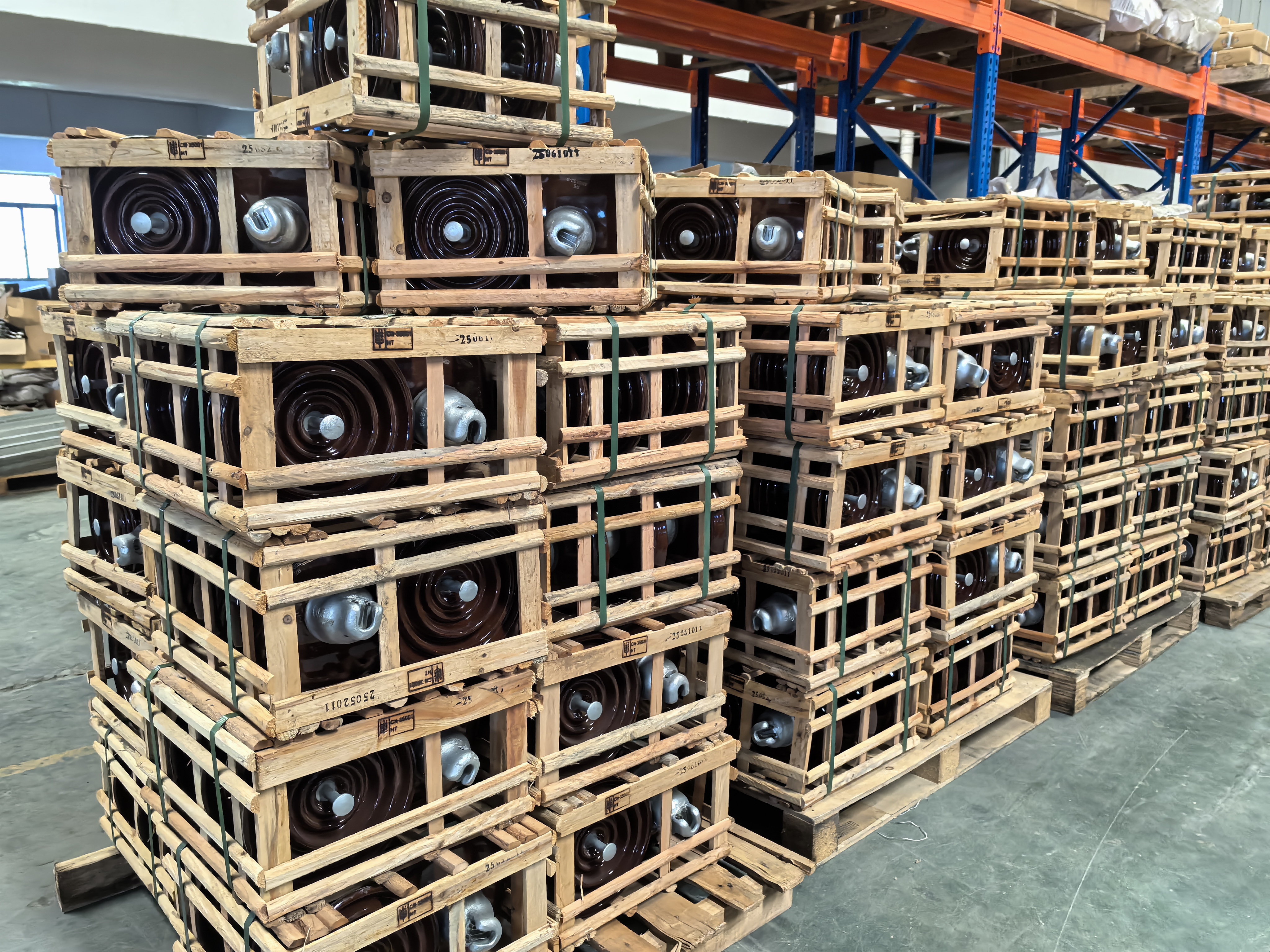
Porcelain insulators are insulators made of electrical ceramics as insulation components. Electrical ceramics are baked from quartz, feldspar, and clay as raw materials. The surface of porcelain insulators is usually covered with porcelain glaze to improve their mechanical strength, prevent water infiltration, and increase surface smoothness.
| Quantity: | |
|---|---|
The Porcelain Insulator is a critical electrical insulation component widely used in overhead transmission and distribution systems. This electrical porcelain insulator provides reliable insulation and mechanical support for conductors, ensuring safe separation between live parts and grounded structures.
Manufactured from high-quality ceramic materials and fired at high temperatures, the porcelain insulator for overhead power lines offers excellent dielectric strength, low water absorption, and long-term stability. It performs reliably in outdoor environments, making it a trusted outdoor porcelain insulator for utility power networks.
Excellent electrical insulation performance
High mechanical strength for conductor support
Low water absorption and strong moisture resistance
Resistant to UV, pollution, and aging
Stable performance in harsh outdoor environments
Long service life with minimal maintenance
Suitable for transmission and distribution systems
Proven reliability in utility power networks
Overhead transmission lines
Overhead distribution lines
Substations and pole-mounted systems
Industrial and utility power networks
Outdoor high voltage and medium voltage lines
• Select the appropriate porcelain insulator based on voltage level and mechanical load.
• Mount the insulator securely on crossarms, poles, or structures.
• Fix conductors onto the insulator using suitable fittings or ties.
• Ensure correct spacing and alignment to maintain electrical clearance.
• Perform routine inspection to check for cracks or surface contamination.
High-purity ceramic raw materials
High-temperature firing for consistent quality
Strict electrical and mechanical testing
Inspection for cracks, glaze defects, and dimensional accuracy
Final quality inspection before delivery
1.High thermal conductivity
2.The highest thermal shock resistance in ceramics
3.Has good chemical and thermal stability
4.Strong anti-aging ability
5.Flexible assembly
1.More environmentally friendly: It is made from natural materials through simple mixing and curing; It can be stored together with other waste in a garbage dump. It can be used as a recycled material for the production of ceramics and similar products.
2.Compared to polymer insulators, they have higher electrical strength and longer service life in terms of loads generated by charges and other temporary electrical phenomena.
3.Our ceramic insulators have high heat resistance and strength, can withstand temperatures up to 1000 ℃, and have significantly higher resistance to surface degradation.
4.Ceramics can resist rodents, termites, birds, and other animals that can damage the integrity of polymers.
5.Strong corrosion resistance in acidic and corrosive environments.
6.Ceramic materials can provide very high mechanical strength under pressure and hardness: ceramic insulators do not deform unless external forces are applied. It can guarantee a service life of up to 40 years.

ANSI Class | 52-1 | 52-2 | 52-3 | 52-4 | 52-5 | 52-6 | 52-8 | 52-9 | 52-10 | ||
IEC Class | XP-45C | XP-70C | XP-70 | XP-70C | XP-110 | XP-110C | XP-160 | XP-45C | XP-160C | ||
Fig No. | 1 | 2 | 3 | 4 | 3 | 4 | 3 | 5 | 4 | ||
Main DemensionS/MM | (H)Unit Spacing/MM | 140 | 160 | 155 | |||||||
(D)Disc Diameter/MM | 165 | 190.5 | 254 | 254 | 254 | 254 | 254 | 108 | 280 | ||
Leakage Distance/MM | 178 | 210 | 292 | 292 | 292 | 292 | 320 | 171 | 280 | ||
Power-frequency Punc- | 80 | 90 | 110 | 110 | 110 | 110 | 110 | 80 | 110 | ||
Average Flashover Voltage | Power Frequency | Dry/KV | 60 | 65 | 80 | 80 | 80 | 80 | 80 | 80 | 80 |
Wet/KV | 30 | 35 | 50 | 50 | 50 | 50 | 50 | 30 | 50 | ||
Critical Impulse | Positive/KV | 100 | 115 | 125 | 125 | 125 | 125 | 125 | 125 | 100 | |
Negative/KV | 100 | 115 | 130 | 130 | 130 | 130 | 130 | 90 | 130 | ||
Combined M &E Strength/KN | 45 | 70 | 70 | 70 | 111 | 111 | 160 | 45 | 160 | ||
Impact Failing Load/N M | 5 | 6 | 6 | 6 | 7 | 7 | 10 | 5 | 10 | ||
Routine Tension Load/KN | 22 | 35.5 | 35.5 | 35.5 | 55.5 | 55.5 | 80 | 22 | 80 | ||
R.I.V Date | Test Voltage To Ground/KV | 7.5 | 7.5 | 10 | 10 | 10 | 10 | 10 | 7.5 | 10 | |
Max R.I.V at 1000KHZ/μV | 50 | 50 | 50 | 50 | 50 | 50 | 50 | 50 | 50 | ||
Weight/KG | 2.5 | 3.9 | 4.6 | 4.9 | 5.6 | 5.9 | 6.9 | 2.6 | 7.2 | ||
Q1: What is a porcelain insulator used for?
A1: It provides electrical insulation and mechanical support for overhead conductors.
Q2: Is porcelain insulator suitable for outdoor use?
A2: Yes, it is designed for long-term outdoor operation.
Q3: How long is the service life of a porcelain insulator?
A3: With proper installation, it can last for decades.
Q4: Does porcelain insulator require frequent maintenance?
A4: Only routine inspection is required.
Q5: Can porcelain insulators be used in polluted areas?
A5: Yes, porcelain insulators perform well in polluted environments.


