WELCOME TO REACON

- All
- Product Name
- Product Keyword
- Product Model
- Product Summary
- Product Description
- Multi Field Search
Views: 0 Author: Site Editor Publish Time: 2025-11-03 Origin: Site
Device | Main Role | Speed | Energy Handling |
|---|---|---|---|
Surge arrester | Stops voltage spikes | <1 nanosecond | 400+ joules |
Insulator | Stops current from leaking | N/A | N/A |
Surge arresters keep electrical systems safe from voltage spikes. Insulators stop electricity from leaking and hold wires in place.
Surge arresters help lower equipment downtime and failures. This makes your electrical system work better and more reliably.
Insulators are very important for safety. They stop current from escaping and prevent short circuits. This helps electricity move safely.
Picking the right device is very important. Using an insulator instead of a surge arrester can damage equipment and cause safety problems.
Surge arresters need regular maintenance to work well. This helps them protect your system from surges and keeps it safe.
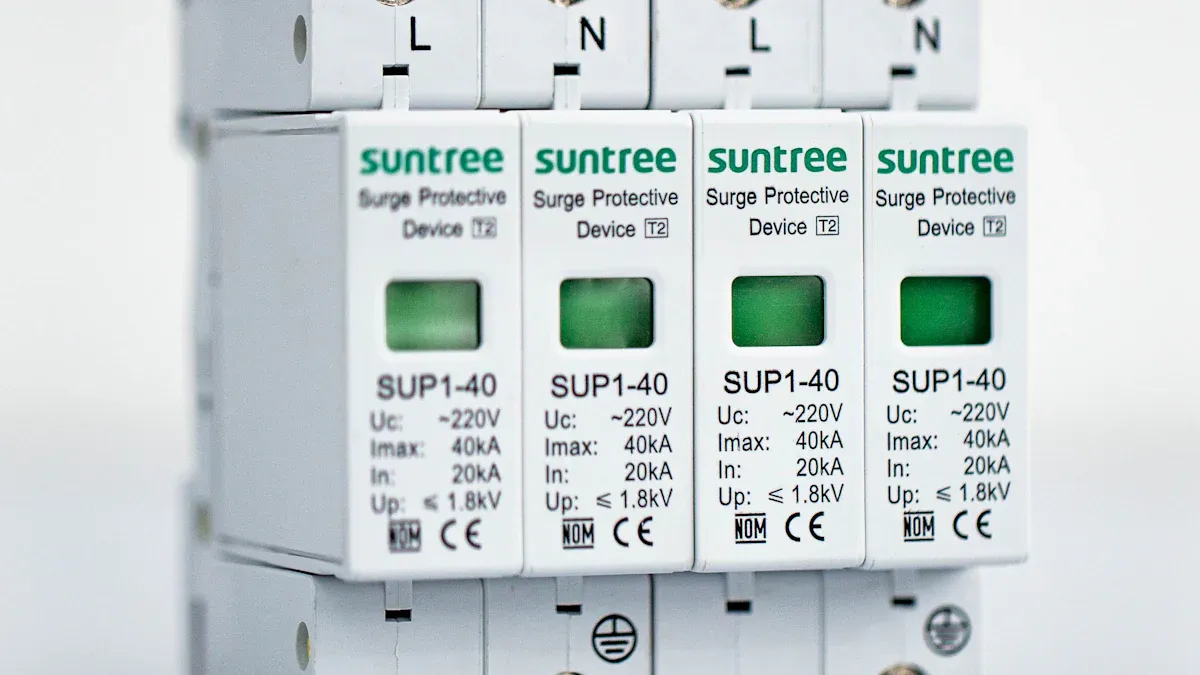
A surge arrester protects electrical systems from voltage spikes. You usually see it attached to wires or equipment where electricity moves. Surge arresters have connectors so you can put them right on circuits. When you use a surge arrester, your system gets a shield from dangerous surges.
A surge arrester acts like a safety valve for electricity. When a voltage spike happens, it reacts right away. It sends extra energy away from your equipment and into the ground. This keeps your devices safe from harm. Surge arresters lower voltage levels and stop overvoltage problems. They protect your equipment from surges caused by lightning, switching, or faults. Most surge arresters work in less than a nanosecond. Your system stays safe even when spikes happen fast.
Tip: Using surge arresters helps you avoid equipment failure and downtime. Many facility workers say they have fewer issues after installing them.
79% of facility workers saw less downtime and fewer failures after adding surge protective devices.
49% had surprise downtime from power surges last year.
57% had to restart equipment or fix problems because of surges.
53% had outages or failures from power surges.
63% said their last surge happened in the past three months.
Surge arresters are used in many places where electrical safety is important. They help in power transmission and distribution. You also find them in factories, renewable energy sites, and telecom centers.
Application Type | Description |
|---|---|
Electric Power Transmission & Distribution | Protects substations, transformers, and power lines. |
Industrial Facilities | Shields machines and control systems from electrical problems. |
Renewable Energy (Wind & Solar) | Stops lightning damage to turbines and solar systems. |
Telecommunications | Protects towers and data centers from power surges. |
Surge arresters help keep your equipment safe and your work running well.
An insulator stops electricity from going the wrong way. It is made of material that blocks electric current. This happens because it has high resistance. You see insulators where safety is very important. They act like walls that keep electricity inside wires. Insulators keep electricity away from people and equipment. Picking the right insulator helps your system stay safe and work well.
Insulators slow down electric current.
They stop current from leaking out.
An electrical insulator keeps electric charge from moving.
Insulators block electric current from going places it should not.
Their high resistance helps control electricity.
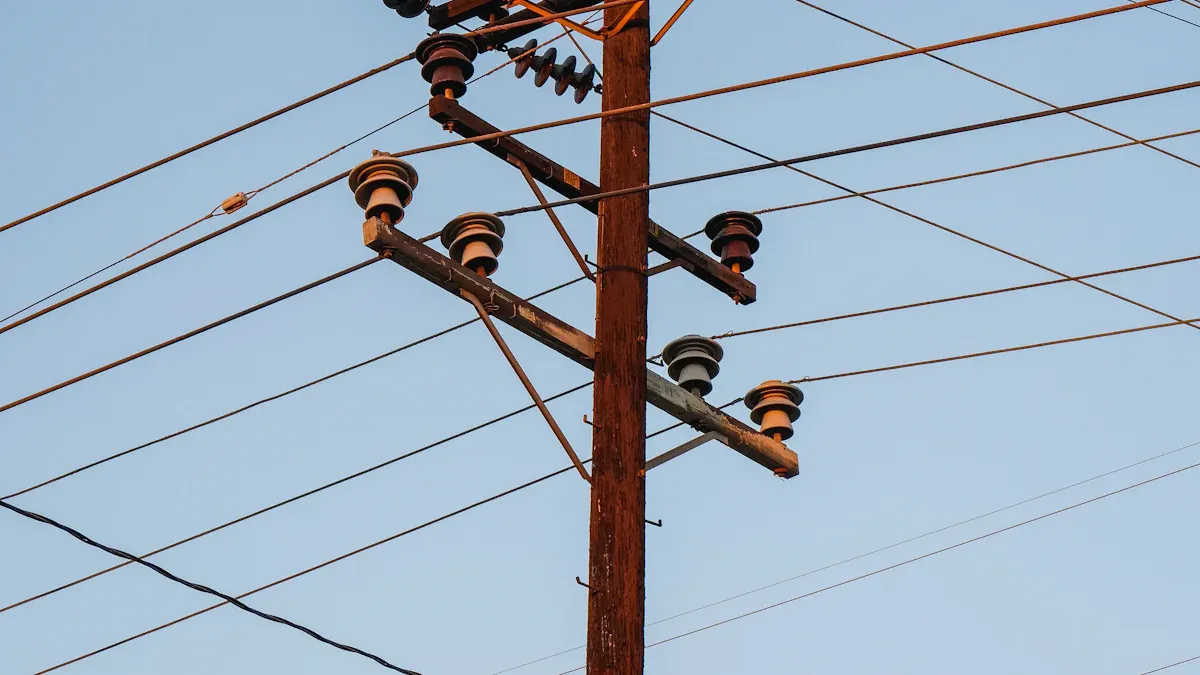
Insulators give strong resistance to electric current. You see them holding wires on power poles. They keep electricity from leaking out. Insulators separate wires from each other and from the ground. This makes sure electricity goes only where you want. Insulators do not have connectors like surge arresters. You attach them to poles or towers to hold up wires.
Note: Good insulation helps your system work better. High-quality insulators stop energy loss and keep things safe.
Here is a table that shows how insulators help:
Function | Description |
|---|---|
Electrical Isolation | Insulators keep electricity from going to the wrong place. |
Mechanical Support | Insulators hold up wires on towers and poles. |
Leakage Prevention | Their high resistance stops electricity from leaking out. |
Insulators are found in many parts of electrical systems. They hold wires up and keep them from touching the ground. Insulators stop electricity from leaking, which keeps people safe. You see insulators on high-voltage lines, substations, and networks. They help electricity travel safely to homes and businesses.
Insulators hold wires and keep them off the ground.
They stop electricity from leaking and make things safer.
Insulators help with high-voltage lines by keeping wires apart.
They stop short circuits and ground faults.
Insulators lower energy loss in high-voltage systems.
You need insulators in networks to deliver electricity safely.
Special insulators, like strain and stay types, help with special needs.
Using the right insulator keeps your system safe and electricity moving where it should.
It is important to know how these devices work. A surge arrester gives protection by sending extra voltage to the ground. It works only when there is a sudden spike, like lightning or switching. An insulator always blocks electric current from leaking. It holds wires in place and keeps electricity from escaping.
Surge arresters keep your equipment safe from sudden voltage spikes. Insulators make sure electricity stays on the right path and does not cause harm.
Here is a simple table to show the main differences:
Feature | Lightning Arrester | Insulator |
|---|---|---|
Main Purpose | Sends surge to the ground | Stops unwanted current |
Conductivity | Works only during surges | Always blocks the current |
Typical Use | Surge protection | Holds wires and blocks current |
Surge arresters and insulators use different materials. Surge arresters often use metal oxide or similar compounds. These help absorb and redirect high energy during a surge. Insulators use porcelain, glass, or polymer. These materials block electricity and keep wires apart.
Modern surge arresters use new materials like EPDM and silicone rubber. EPDM resists moisture and UV rays very well. Silicone rubber helps keep water away and resists damage. Insulators also use polymer materials for better flexibility and weather protection.
Material | Properties |
|---|---|
EPDM | Keeps water away, resists damage, strong against sunlight, tough, does not let moisture in |
Silicone Rubber | Helps keep water off, resists damage and tracking |
New technology adds smart systems and nanotechnology to both devices. You can check your equipment’s condition anytime and avoid long downtime.
Surge arresters and insulators are used in different places. Surge arresters protect substations, transformers, and power lines. They keep equipment safe from voltage spikes and lightning. Insulators hold wires on towers and poles. They stop electricity from leaking and prevent short circuits.
Here is a table showing where you use different surge arresters:
Type of Surge Arrester | Application Description |
|---|---|
Station Class Arresters | Used in substations to protect important equipment. |
Intermediate Class Arresters | Good for medium-voltage things like transformers. |
Distribution Class Arresters | Made for low-voltage lines and equipment. |
Metal-Oxide Varistor (MOV) Arresters | Used in homes, businesses, and factories. |
Secondary Surge Arresters | Put on smaller circuits to protect home appliances. |
Insulators work best on towers, poles, and inside substations. You need them to keep wires apart and stop electricity from escaping.
If you use a surge arrester instead of an insulator, your equipment can get damaged and cost more to fix. Mixing up these devices can cause voltage problems and make your system less reliable.
Surge arresters protect against voltage spikes and work only during surges.
Insulators always block current and hold wires in place.
Surge arresters use metal oxide, EPDM, and silicone rubber.
Insulators use porcelain, glass, and polymer.
Surge arresters protect against lightning and switching surges.
Insulators stop current from leaking and keep wires safe.
International standards like IEC 61643-11 say surge arresters protect against sudden overvoltages from lightning and switching. Insulators do not have a direct match in these standards.
Tip: Pick the right device for your system. Surge arresters keep your equipment safe. Insulators keep electricity under control.
It is important to know how surge arresters and insulators work. Surge arresters protect electrical systems from voltage spikes. Lightning can cause these spikes. Surge arresters send extra energy into the ground. This keeps your equipment safe. It helps stop fires and electric shocks. Insulators also help keep things safe. They stop electricity from leaking out of wires. Insulators prevent short circuits. Busbar insulators hold wires up and block electricity. This helps your system work without problems.
Using the right device keeps you and others safe. Surge arresters and insulators work together for safety.
Surge arresters and insulators protect your equipment. Surge arresters keep devices safe from voltage spikes. They help computers and machines last longer. You save money on repairs and replacements. Insulators also protect equipment. They keep electricity in the wires. Insulators hold wires up and handle wind and rain. This lowers the chance of faults. Your system works better and has fewer problems.
Surge arresters send extra voltage away from equipment.
They protect against lightning and sudden surges.
Insulators stop current from leaking and short circuits.
They hold wires up and handle stress.
Mixing up surge arresters and insulators is risky. If you use an insulator instead of a surge arrester, voltage spikes can hurt your equipment. This can cause fires or injuries. If you use a surge arrester where you need an insulator, electricity may leak out. This can cause short circuits. You must pick the right device for each job. This keeps your system safe and reliable.
Mistake | Possible Result |
|---|---|
Wrong device installed | Equipment damage |
No surge protection | Higher chance of fire |
Poor insulation | Current leaks, short circuits |
Always check your system and use the right device. You make things safer, protect equipment, and avoid big problems.
You have learned that surge arresters keep your electrical system safe from voltage spikes. Insulators stop electricity from leaking and causing problems. Picking the right device makes things safer and more reliable.
Surge arresters send surge currents away and lower flashover risk.
Insulators keep the system strong and stop electricity from leaking.
Training tools, like online classes and site checks, teach you how to use these devices the right way.
Use what you know to keep your electrical systems safe and working well.
Your equipment can get damaged. Insulators do not stop voltage spikes. Surge arresters protect systems from sudden surges. Always pick the right device for the job.
Yes, you can use both. Surge arresters stop voltage spikes. Insulators hold wires and block leaks. Using both makes your system safer and more reliable.
Look at what your system needs. Use a surge arrester to stop voltage spikes. Pick an insulator to keep wires apart and block current.
You should check surge arresters often. Look for damage or wear. Clean them if they get dirty. Regular checks help keep your system safe.
No, insulators are used in many places. You find them in substations, inside equipment, and on towers. Insulators work anywhere you need to block electric current.