WELCOME TO REACON

- All
- Product Name
- Product Keyword
- Product Model
- Product Summary
- Product Description
- Multi Field Search
Views: 0 Author: Site Editor Publish Time: 2025-11-05 Origin: Site
You use a pin type insulator to keep wires apart from their supports. This device stops electricity from leaking out. It holds the wires tightly in place. You depend on it to protect lines from wind, rain, and sunlight. A pin type insulator helps your power system stay safe and work well, even when the weather is bad.
Pin type insulators help keep power lines safe. They stop electricity from leaking out. They hold wires tightly. They protect wires from bad weather.
These insulators are made from porcelain or composite. Porcelain is strong and lasts a long time. Composite materials are lighter and do not get dirty easily.
When picking a pin type insulator, think about the voltage level. Also, look at the weather and how strong the insulator is. This helps keep things safe and working well.
Pin type insulators work best for low or medium voltage lines. They can be used up to 33 kV. They do not work for high voltage lines.
Check pin type insulators often for damage or dirt. This helps them work well and stops electrical problems.
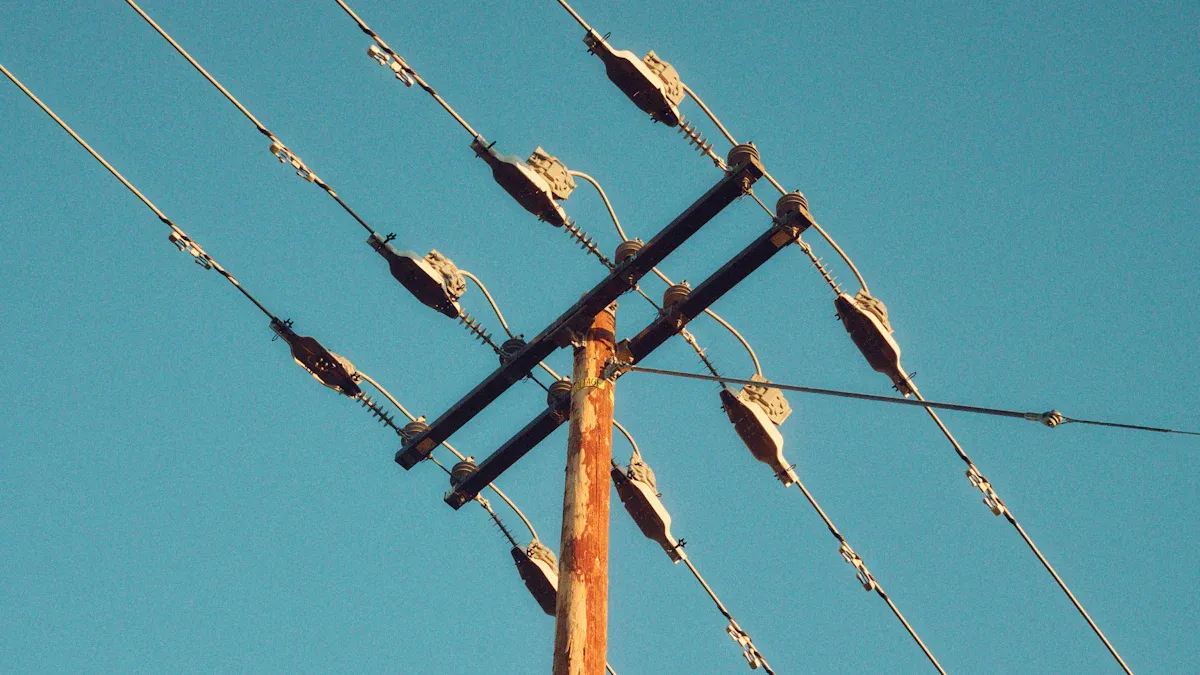
A pin type insulator looks like a thick disc. There is a groove at the top. The groove holds the wire tightly. The base has a hole for a metal pin. You use this pin to attach the insulator. It goes on a cross-arm or support. The neck size and pinhole diameter must fit right. For example, neck size "F" fits 13.2 kV lines. A pinhole diameter of 1 inch is common. A pin length of 6 inches helps keep it secure.
Tip: The insulator’s shape and size stop electricity from leaking. It keeps wires steady in any weather.
Here is a table with some common sizes and shapes:
Standard | Description |
|---|---|
ANSI C29.5 | Low voltage pin types for 6 kV to 35 kV uses |
ANSI C29.6 | High voltage pin types for 11 kV to 35 kV uses |
IEC 60383 | Pin type insulators with zinc sleeve and steel head spindle |
BS3288 | British Standard for pin type insulators |
Pin type insulators use two main materials. These are porcelain and composite materials. Porcelain gives strong support and good insulation. Composite materials use fiberglass rods and silicone rubber. These make the insulator lighter and stronger.
Porcelain: Has high strength and great insulation.
Composite: Uses fiberglass and silicone rubber for more strength and less weight.
Porcelain insulators resist water, sunlight, and heat. Composite insulators also work well in tough places. Both types help keep power lines safe and working.
The mechanical and electrical strength of a pin type insulator keeps your system safe. Porcelain insulators hold heavy wires and do not break easily. Glass insulators get heat treatment to make them stronger. Both types have high electrical resistance. This stops electricity from leaking.
Here is a table that compares porcelain and glass insulators:
Property | Porcelain Insulators | Glass Insulators |
|---|---|---|
Mechanical Strength | High compressive strength | Toughened glass makes it stronger |
Electrical Isolation | Dielectric strength over 10 kV per millimeter | High electrical resistance |
Environmental Durability | Stays strong in all weather | Different ways it can fail under stress |
Service Life | Lasts over 50 years | Depends on design and material |
You should know about ANSI standards for low voltage pin type insulators. Classes 55-1 and 55-2 are for voltages up to 7.2 kV. These standards set rules for leakage distance, arcing distance, and flashover voltage. For example, class 55-1 has a leakage distance of 4 inches. It has a dry flashover voltage of 35 kV. Class 55-2 has a leakage distance of 5 inches.
ANSI classes for low voltage: 55-1 and 55-2
Voltage rating: Up to 7.2 kV
Leakage distance: 4 inches (55-1), 5 inches (55-2)
Dry arcing distance: 2-1/4 inches (55-1), 3-3/8 inches (55-2)
Flashover voltage (dry): 35 kV
Flashover voltage (wet): 20 kV
These standards help make sure your pin type insulator is safe and lasts a long time.
You need a pin type insulator to keep electricity in the wires. The insulator uses porcelain and composite materials to block current. These materials have high electrical resistance. Electricity cannot pass through them to the pole or ground. The insulator has a shape like an umbrella. This shape keeps rainwater away from the surface. It helps the insulator stay dry and keep its power.
The surface of the insulator matters a lot. Grooves and sheds make the creepage distance longer. Creepage distance is the path along the surface from wire to support. A longer creepage distance makes it harder for electricity to leak. The insulator gives enough leakage distance. This stops flashover during storms or wet weather.
Insulating Material: Porcelain and composite materials block current from reaching the support.
Leakage Distance: The long surface path helps resist electrical stress.
Flashover Performance: Shed shapes and water-repellent surfaces keep moisture away.
Creepage Distance: A longer path helps stop leakage current, even in dirty or wet places.
You get strong protection against electrical problems. The design and materials work together to keep your system safe.
Note: The umbrella shape and high resistance materials help the pin type insulator stop electrical leakage and flashover, even when the weather is bad.
Pin type insulators keep power lines safe and working well. They hold wires tightly and keep them apart from the pole. You depend on them for mechanical support. They carry the weight of the wires and move tension to the pole. This keeps lines steady, even when wind or ice pushes on them.
Pin type insulators also give electrical isolation. They stop electricity from moving from the wire to the pole or ground. This prevents faults and keeps your network working. These insulators resist wind, vibration, and temperature changes. They help keep wires lined up and spaced right across the network.
Here is a table that shows how pin type insulators help your power system:
Role of Pin Type Insulators | Contribution to Safety and Reliability |
|---|---|
Mechanical Support | Gives strength to hold loads and move tension to the pole. |
Electrical Isolation | Keeps energized lines and grounded structures apart to stop faults. |
Environmental Resistance | Stands up to tension, wind, ice, and vibration, keeping things stable. |
Alignment and Spacing | Helps keep wires lined up across the network. |
Durability | Good materials make sure it lasts long and resists rust. |
You rely on pin type insulators to keep your power network safe. They make sure electricity goes only where you want it. You get steady service and fewer problems.
Pin type insulators are used on overhead power lines. They keep wires apart and hold them tight on poles. These insulators work for lines that carry up to 33 kV. The table below shows the voltage range for pin type insulators:
Insulator Type | Voltage Range |
|---|---|
Pin Insulator | Up to 33 kV |
Pin type insulators are best for low and medium voltage lines. You see them in country areas, city roads, and small power stations. Their shape helps keep wires at safe distances from each other and the pole. They work well where there is not too much force on the wires.
Tip: Use pin type insulators for overhead lines with voltage up to 33 kV. This helps your system stay safe and work well.
You must think about many things when picking a pin type insulator. The right insulator stops electrical trouble and keeps your system working.
Voltage level of the line
How much weight and wind the wires have
Weather like wetness and temperature changes
What the insulator is made of
How well it fights dirt and pollution
How strong it is against electricity
If it meets the needed standards
If the maker is trusted
Wet weather, dirt, and heat can change how your insulator works. Silicone rubber insulators help fight dirt because they push water away. This lowers the chance of flashover, even when the insulator is dirty or wet. You can make insulators work better by using polymer types or special coatings.
Environmental Condition | Effect on Insulator Performance |
|---|---|
Humidity (Condensation) | Water on the insulator can cause more electricity to leak. |
Pollution (Contamination) | Dirt and chemicals make more electricity leak on the surface. |
Temperature (Dew Point) | Dew can form and raise the chance of electrical problems. |
Note: Check and fix your insulators often to find problems early. You can use real-time checks to keep insulators working, even in hard places.
Pin type insulators give you many good things. They last for a long time. You do not need to change them often. You spend less money fixing them after you put them in. The cost to install them is lower than other insulators. This makes them a smart choice for many power lines.
Pin type insulators hold wires tightly. They do not break easily from wind or rain. You can trust them to keep your wires safe in most places. Their shape helps stop electricity from leaking. They also help stop flashover in low and medium voltage lines.
Tip: Using pin type insulators in the right places saves money and makes your system work better.
You should know what pin type insulators cannot do. They do not work for very high voltage lines. Their voltage rating goes only up to 36kV. You cannot use them for bigger power lines.
Here is a table that shows how much they can handle:
Aspect | Details |
|---|---|
Voltage Rating | Limited to 36kV, restricting use in high voltage applications. |
Mechanical Strength | Greater mechanical strength but requires a spindle for arrangement. |
Damage Potential | The pin can damage the insulator thread, further limiting its applications. |
Pin type insulators can have problems in dirty or tough places. Dirt and chemicals can make them fail and cause power loss. Very hot or cold weather can crack or break them. You need to check them often to keep them working well.
Dirt from factories, farms, or the sea can hurt how they work.
Hot and cold weather can make them expand or shrink and break.
Pollution in the air can make them wear out faster.
Note: Check pin type insulators often if you use them where there is a lot of dirt or bad weather.
Suspension insulators are used on high-voltage lines. They have a chain made of discs. These discs are porcelain, glass, or composite. Each disc lets the insulator hold more voltage. If one disc breaks, you can change just that disc. This makes fixing them easier. Suspension insulators work for voltages from 11 kV to 765 kV. Their design bends and moves with heavy loads and strong wind.
Here is a table to compare pin type and suspension insulators:
Feature | Pin Insulator | Suspension Insulator |
|---|---|---|
Voltage Capacity | Up to 11 kV | 11 kV to 765 kV |
Design | Simple, fixed | Multiple discs, flexible |
Application | Distribution lines | Transmission lines |
Material | Strong ceramic or composite | Porcelain, glass, or composite |
Flexibility | Low | High |
Maintenance | Less frequent, whole unit replaced | Replace single discs, easier repair |
You pick suspension insulators for heavy wires and high voltage. Their chain shape gives strength and lets them bend. Pin type insulator works better for lower voltages and simple lines.
Tip: Use suspension insulators for long wires and high voltage. They help keep your system safe and flexible.
Strain and shackle insulators do special jobs in power systems. Strain insulators go where wires end or turn sharply. They must hold strong pulling forces. Strain insulators support overhead lines and antennas. They keep wires tight at ends or corners.
Shackle insulators are used for low voltage lines, under 11 kV. You see them on short poles or in cities. Shackle insulators hold wires and help with turns.
Here are some main points about these insulators:
Strain insulators hold wires tight at ends and curves.
Shackle insulators fit low voltage lines and keep wires steady.
Pin type insulator works best for straight lines on distribution systems.
When you put in shackle or pin insulators, you follow steps. You check the spot, attach the insulator, and connect the wire. You also look at them and clean them often. Strain insulators need extra checks for tension and damage.
Note: Always choose the right insulator for your line’s voltage and strength needs. This helps your system stay safe and work well.
Pin type insulators keep wires safe and apart from poles. You use them for power systems up to 33kV. They give strong electrical insulation. They stand up to wind, heat, and dirt. You can count on them to last a long time and work well.
High dielectric strength stops electricity from leaking out.
Strong materials do not rust and handle high heat.
Surfaces clean themselves by shedding dust and pollution.
The design works for many kinds of setups.
New materials help with modern electrical needs.
When you pick an insulator, think about safety and cost. Also, check how well it works where you live. Look at the good and bad points to choose the best one for your power system.
A pin type insulator keeps wires away from poles. It stops electricity from leaking out. This helps keep power lines safe.
You check the voltage of your line. You think about the weather in your area. You look at how strong the insulator needs to be. You make sure it meets safety rules.
Pin type insulators are not for high voltage lines. They work best for lines up to 33 kV. For higher voltages, use suspension insulators.
Check pin type insulators once every year. Look for cracks, dirt, or damage. Clean or change them if you see problems.
Pin type insulators use porcelain and composite materials. Porcelain gives good insulation and strength. Composite materials make them lighter and tougher.