WELCOME TO REACON

- All
- Product Name
- Product Keyword
- Product Model
- Product Summary
- Product Description
- Multi Field Search
Views: 0 Author: Site Editor Publish Time: 2025-11-03 Origin: Site
You can still see pin insulators on many power lines today. These insulators work for medium voltage jobs. Most are made for voltages up to 11 kilovolts. Pin insulators are often made from porcelain or glass. These materials help them stand up to weather and electrical stress. You can put these insulators on utility poles easily. Pin insulators give good performance and are easy to take care of. If you compare pin insulators to other types, you see differences in cost, strength, and how well they fit certain places.
Pin insulators work well for medium voltage lines. They can handle up to 33 kV. This makes them good for utility poles in many places.
These insulators use strong materials like porcelain and glass. This helps them last through bad weather and electric stress.
It is easy to install pin insulators. They do not need much care. This makes them a smart choice for power networks.
For high voltage jobs, use other types like suspension or post insulators. Pin insulators do not work well above 33 kV.
Keep learning about new materials and technology for pin insulators. New ideas can make them work better and last longer.
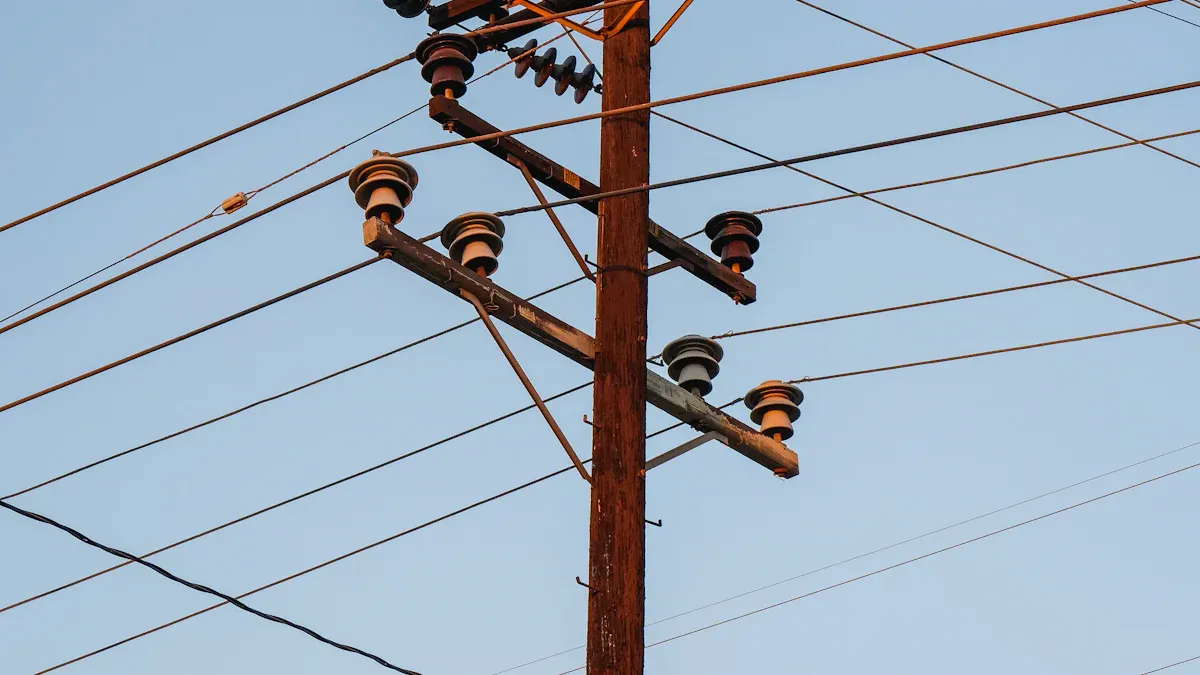
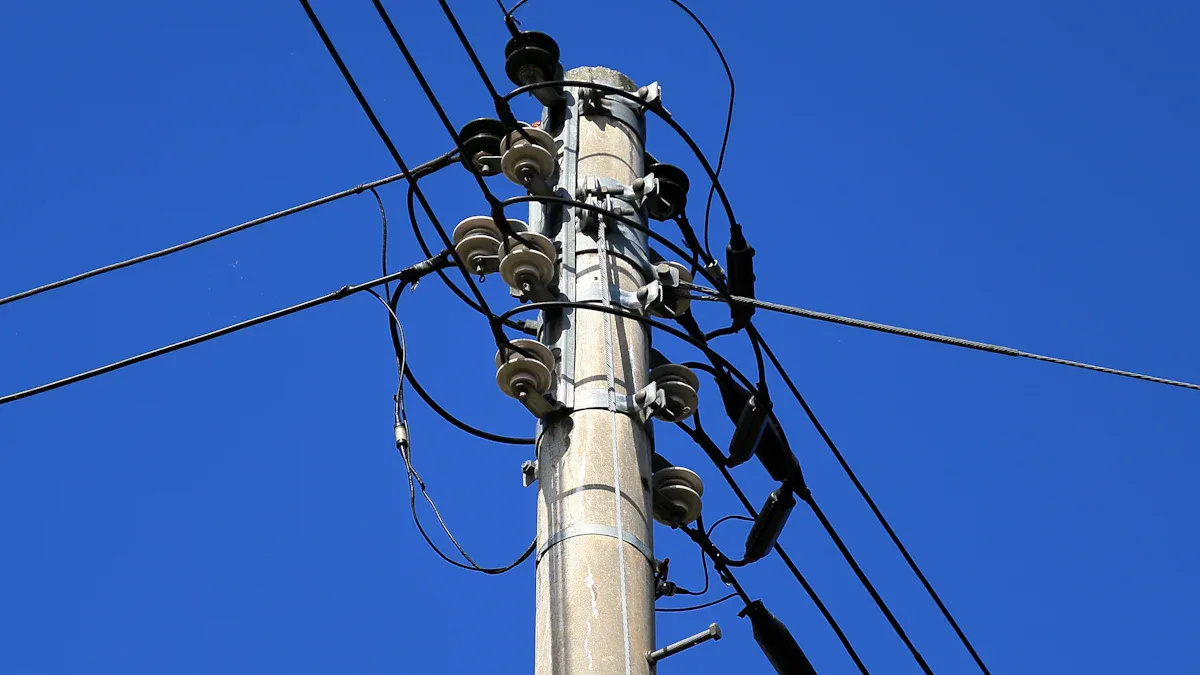
Pin insulators are seen on many overhead power lines. They hold wires up and keep electricity moving safely. These insulators work well for medium voltage jobs. You can find them in cities, towns, and country areas. They help grow the power grid where more electricity is needed.
Here is a table that shows where pin insulators are used most:
Region/Country | Usage Context |
|---|---|
Urban Areas | Used in low and medium voltage networks |
Rural Areas | Needed for expanding the distribution grid |
Emerging Markets | More demand as grids are built |
Pin insulators are reliable for lower voltage lines. You can put them on utility poles quickly. They do not need much care.
Pin insulators are also used in communication networks. They hold up telephone and data cables. These insulators keep wires apart and stop signal loss. Pin insulators protect cables from weather and damage. You see them on poles near roads and in neighborhoods.
Pin insulators are best for short and medium distances. They keep communication lines safe and working.
Pin insulators can handle up to 33 kV. They are used for most distribution lines. They do not work well for high voltage transmission. If voltage is over 33 kV, pin insulators get big and hard to use.
Here is a table that compares insulator types for overhead lines:
Insulator Type | Voltage Capacity | Mechanical Strength | Reliability in Overhead Lines |
|---|---|---|---|
Pin Insulators | Up to 33 kV | Moderate | Good for lower voltages |
Post Insulators | Up to 69 kV | High | Better for higher voltages |
Suspension Insulators | High Voltage | High | Easy to replace and flexible |
Pin insulators have limits. If you use them above 33 kV, they do not work as well. You might see flashover or stress.
Here is a table that shows pin insulator limits for voltage:
Voltage Capacity | Limitation |
|---|---|
Above 66 kV | Size, weight, and cost go up |
Voltage Capacity | Description |
|---|---|
Up to 33 kV | Good to use |
Above 50 kV | Gets big and costs more |
Voltage Capacity | Performance |
|---|---|
Above 33 kV | Performance drops, flashover and stress can happen |
You should know these limits before picking pin insulators for your network. For high voltage lines, you need other insulators. Pin insulators are best for medium voltage and local use.
Tip: Always check the voltage before you pick pin insulators for your project. This helps you avoid trouble and keeps your network safe.
Pin insulators are made from porcelain or glass. Porcelain is strong and gives good insulation. Glass insulators have smooth surfaces and resist hits well. Both materials help insulators work in bad weather.
Here is a table that compares porcelain and glass pin insulators:
Performance | Porcelain Disc Insulator | Glass Insulator |
|---|---|---|
Mechanical strength | High, but can crack | Tempered glass is strong, but breaks on impact |
Impact resistance | Can form micro cracks, ages over time | Smooth surface, strong resistance |
Insulation performance | Can be affected by humidity and pollution | Stable insulation in most conditions |
Aging resistance | May lose strength over years | Breakage shows aging, easy to spot |
Some pin insulators use composite materials. These have fiberglass rods and silicone rubber. They are lighter and stand up to weather better.
Note: The body and sheds of pin insulators use these materials. This helps them last longer and work better.
Pin insulators are put on crossarms in a horizontal way. Skilled workers and special tools are needed for this job. Each insulator must be lined up right to avoid trouble. Post insulators go on vertically instead. Both types need careful planning.
Pin insulators are simple to handle and fit most utility poles.
You can use them in cities and country areas.
Their design makes it easy to replace or fix them.
The pin and body parts help make installation safe and easy.
Pin insulators have features that help them work well. Their design gives strong insulation and strength. They can resist rust and high heat.
Here is a table showing key features:
Feature | Description |
|---|---|
Excellent Electrical Insulation | Prevents current leakage, keeps lines safe |
Mechanical Strength | Handles tension from wires, wind, and ice |
Corrosion Resistance | Materials resist rust and damage |
Self-Cleaning | Surface sheds dust and pollution |
High-Temperature Resistance | Works in hot and cold climates |
Longer leakage and creepage distances help pin insulators work better in dirty or wet places. You get good service and fewer problems.
Tip: Pick the right design and material for your pin insulators. This helps match your weather and voltage needs.
Today, there are other choices besides pin insulators. These choices help with problems pin insulators cannot fix. They work better for high voltages or tough places.
Suspension insulators are used for high-voltage lines. You see them hanging from towers and poles. They hold wires over long distances. These insulators bend and handle strong force. They are good in places with lots of dirt and wet weather. They keep working when pin insulators might fail.
Suspension insulators are great for overhead lines.
You find them in substations needing high-voltage insulation.
Their design lets you swap out broken disks fast, so fixing them is easy.
Tip: Pick suspension insulators for long wires or rough places.
Post insulators look and work differently than pin insulators. You use post insulators for vertical loads. They are good for substations and switchgear. These insulators are bigger and stronger. They fit low-voltage and indoor wiring jobs. You see post insulators outside where extra support is needed.
Insulator Type | Characteristics | Primary Applications |
|---|---|---|
Pin Insulator | Smaller, pointed design | Overhead power lines, telephone circuits |
Post Insulator | Larger, cylindrical shape | Substations, switchgear, indoor wiring |
Pick post insulators when you need to install them upright. They give more strength. They work best where pin insulators do not fit.
When you look at cost and use, you see differences. Pin insulators cost less for low voltage. They get heavy and cost more for high voltage. Suspension insulators cost more but work better for high voltage. Post insulators are strong and safe but cost more to replace.
Pin insulators are best for up to 33 kV.
Suspension insulators fit high-voltage lines and easy repairs.
Post insulators are good for upright loads and hard places.
Composite pin insulators are another choice. These are lighter and stronger. They resist dirt and damage. You see them more as networks get better and greener.
Note: Pick your insulator based on voltage, place, and how much care it needs. Always match the pin insulator type to your project for the best results.
Pin insulators are changing a lot. Makers use new materials like composites and polymers. These materials are lighter and stronger than porcelain or glass. Silicone rubber helps pin insulators last longer in bad weather. Nanotechnology makes them better at handling electricity. This helps power move more easily. Look at the table below to see how new materials compare:
Material Type | Characteristics |
|---|---|
Lightweight, tough, hard to damage, great insulation | |
Polymer composites | Better electrical work, stops tracking and wearing down |
Silicone rubber | Lasts longer and works well in rough weather |
Nanotechnology | Makes insulation better with tiny particles |
Factories use smart computers to design insulators for special jobs. You get better quality and lower prices. These changes help pin insulators work in more places.
Pin insulators are now part of smart grids. Some have sensors and tech inside them. These sensors check temperature and stress all the time. You get warnings if something is wrong. This lets you fix problems fast. Power networks become safer and more reliable. IoT helps you plan repairs and stop long breaks.
Sensors watch pin insulators’ condition.
Real-time info keeps the grid working well.
Smart grids use these tools to save energy.
Pin insulators are getting greener. Makers recycle glass and metal parts. Old cement is used to build roads. Factories use less energy and recycle water. Safe glazes make production better. Many places use clean energy to cut pollution.
Initiative Type | Details |
|---|---|
Glass Recycling | Glass can be recycled over and over |
Metal Recycling | Caps and pins are easy to recycle |
Cement Reuse | Cement from insulators is used for roads |
Manufacturing Improvements | Lighter caps, more recycled glass and metal |
Porcelain Practices | Energy-saving kilns, water reuse, safe glazes, clean energy |
Polymer pin insulators help nature because they are light. You use less stuff and make less trash. They last longer, so you replace them less often. Some polymers do not break down fast, so you must throw them away carefully.
Tip: Pick pin insulators made with recycled materials and energy-saving methods. This helps the planet and supports a cleaner future.
Pin insulators are important in today’s power networks. They hold wires up and keep them safe from problems. Pin insulators work best for medium voltage lines. But things like weather and pollution can cause issues. Other insulators work better for high voltage lines. Experts think pin insulators will still be used a lot. Power grids are getting bigger and new energy sources are coming.
Key Trends and Drivers | Description |
|---|---|
Reliable Power Transmission | Needed for bigger networks |
Renewable Energy Growth | Needs strong insulators |
Smart Grid Advances | Makes insulators better |
Pin insulators help your power system stay safe.
Watch for new materials and designs soon.
Pin insulators work for medium voltage lines. They are used on utility poles in cities and country areas. These insulators keep wires apart and safe. You mostly see them on distribution networks.
Pin insulators go on crossarms. Workers use special tools to put them in place. Each insulator must match up with the wire. This stops electrical trouble and keeps the network safe.
Pin insulators can handle rain, snow, and heat. Porcelain and glass help protect them from harm. They work well in most weather. Regular checks help you find problems early.
Pin insulators are good for lines up to 33 kV. For higher voltages, you need other insulator types. Bigger voltages make pin insulators heavy and hard to use.
You can change pin insulators fast. Their simple shape lets you swap them with basic tools. This saves time and keeps power lines working.